Art of Writing and Lillastraing Childrens Books and Getting Them Published Book
As a children's book editor, I've helped hundreds of authors write, edit and publish their children'southward book.
Anyone tin can sit down down and dash out a children's book, and with a petty help and guidance, yours can exist adept enough to earn the attention of thousands of children.
And nothing beats the feeling of property your printed book in your hands and reading it to a kid for the first time.Follow these 12 steps and you'll get there in no time.
In this article y'all'll larn:
- How to generate a concept that works
- How to create a master grapheme that children love
- How to write the right length
- How to structure the plot
- How to work with an illustrator
- How to revise
- How to publish
Lastly, you tin read this whole post and get a decent agreement of how to write a children's volume, but if you want the total, in-depth experience with even more than information, videos, PDFs, quizzes, and exercises, you can take my 30-video form on how to write a children's volume called, "Ii Weeks To Your Best Children'southward Book."
Okay, buckle up and get ready! These are the 12 steps to writing a children's volume.
one. Find Your Best Idea

You probably accept an idea already, but you should work on refining it. Hither's how:
- Google "children'due south book" and a phrase that describes your book.
- Once you've institute books that are similar, look at the summary of those books.
- Figure out how your book is unlike than the published ones.
This might seem commonsense to check what's already out in that location before putting all your time and free energy into a book, but so many authors don't do it! This is simply basic inquiry that y'all can do in 2 minutes that will give yous a sense of competing books.
When I lead well-nigh authors through this process, they notice that their idea has already been written most. Now, that's not necessarily a bad matter — actually, it'south proof that children want to read about their topic!
The play a trick on is to have i twist for your story that makes it different. If it'due south a story near bullying, perhaps your book tells the story from the indicate of view of the swell! Or if it's a story about a dog, brand this canis familiaris a stray or blind in one eye.
Perhaps your story is dissimilar because you have a surprise at the end, or maybe it'southward unlike considering it'southward for an older or younger age grouping, or your character has a magical guide like a fairy or elf to atomic number 82 them through their journeying. Simply add one twist that distinguishes it from other books.
2. Develop Your Primary Grapheme
I edit hundreds of children'due south books every year, and the all-time books have unique characters. They are quirky in some way. They take a funny addiction. They look strange. They talk differently than everyone else.
Simply when I see a book where the principal character is indistinguishable from every child, that worries me. Yous don't desire a character who stands in for every kid, y'all want a main graphic symbol that feels REAL.
My communication would be to go through a Character Questionnaire and figure out how much you lot know nearly your character:
- What does your main character desire?
- What is their all-time/worst habit?
- Are they an extrovert or introvert?
- How do they speak differently than everyone else? (cute sayings, repeated phrase/word, dialect, high/low volume)
- Do they doubt themselves or practice they have also much bravery?
- Practise they have any pets? (or does your beast character have man owners)
- What makes your main grapheme feel happy?
- Do they take any secrets?
- What would this character do that would be very out of character?
- What is one matter this graphic symbol loves that most people dislike?
Now score yourself on how many you knew right away:

eight – 10
Congrats! Your character feels like a existent person to you!

6 – vii
Pretty skilful! Y'all have thought deeply about your character.

five and below
Have a few more character questionnaires before you starting time writing.
If you'd like more questions, I have an expanded version of this questionnaire in my form.
3. Write the Correct Length
What'due south the right word count for your volume?
This is probably the almost mutual question I get asked, and it's also the one that nigh writers become wrong.
Ultimately, you lot need to figure out what age range y'all're writing for, so write within that discussion count.
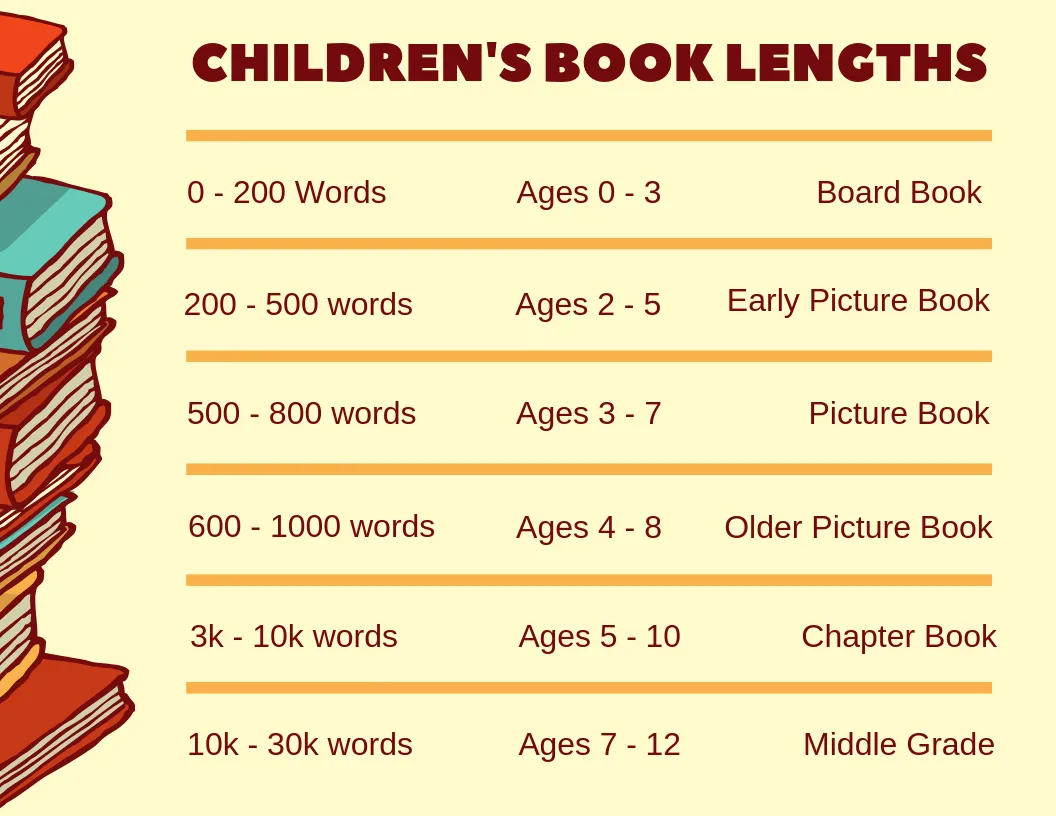
Near writers are writing picture books for ages three – vii — that's the about common category. If that's yous, then shoot for 750 words. That's the sweet spot.
If yous write a picture book more than one,000 words, you're sunk. You admittedly have to go along it under 1,000 words. It'due south the most unyielding rule in the unabridged manufacture. Seriously, have out all the cherry pens and slash away until you've whittled it downward.
4. Get-go the Story Quickly
Many unpublished children'south books fail to grab the child's attention (and parent's attention!), and that'southward because they showtime too ho-hum. If your story is about a child joining a circus, they should join on the showtime or 2nd page.
Don't give backstory about this child'southward life. Don't set the scene or tell u.s.a. what season it is.
Just have the circus come into boondocks, and as soon as possible, have the kid become a clown or tightrope walker or lion tamer.
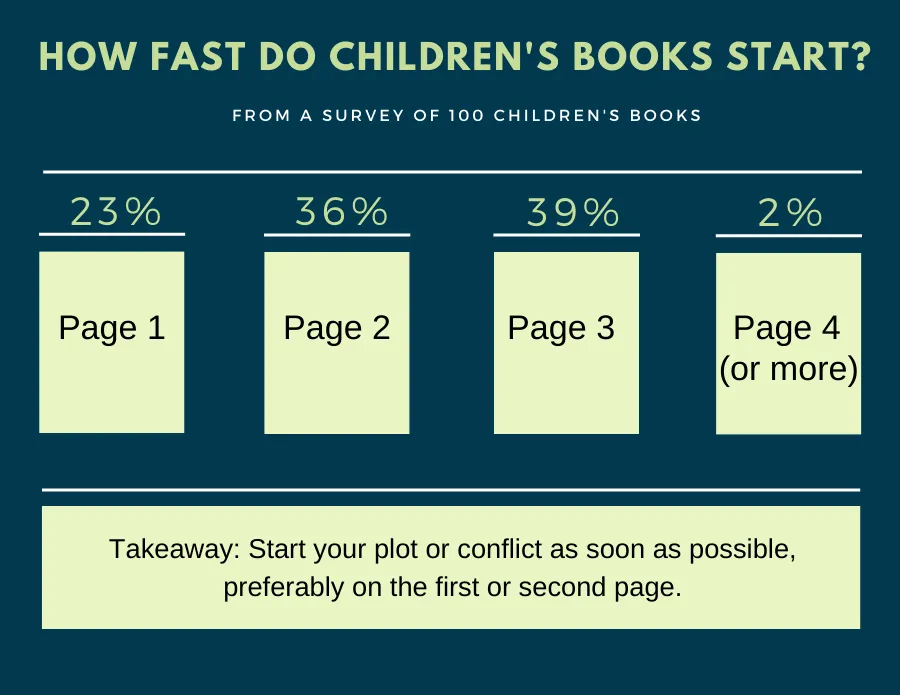
You have such a brusque infinite to tell your story that you can't waste any time. The pacing of children's stories generally moves lickety-dissever, so don't write at a tortoise pace.
For instance, look at the picture book "HippoSPOTamus." When practice you retrieve the hippo discovers the red spot on her bottom?
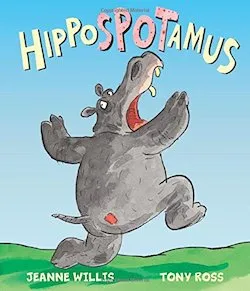
Yep, it's on the first page.
And that upshot launches the unabridged story.
Starting time your book that quickly.
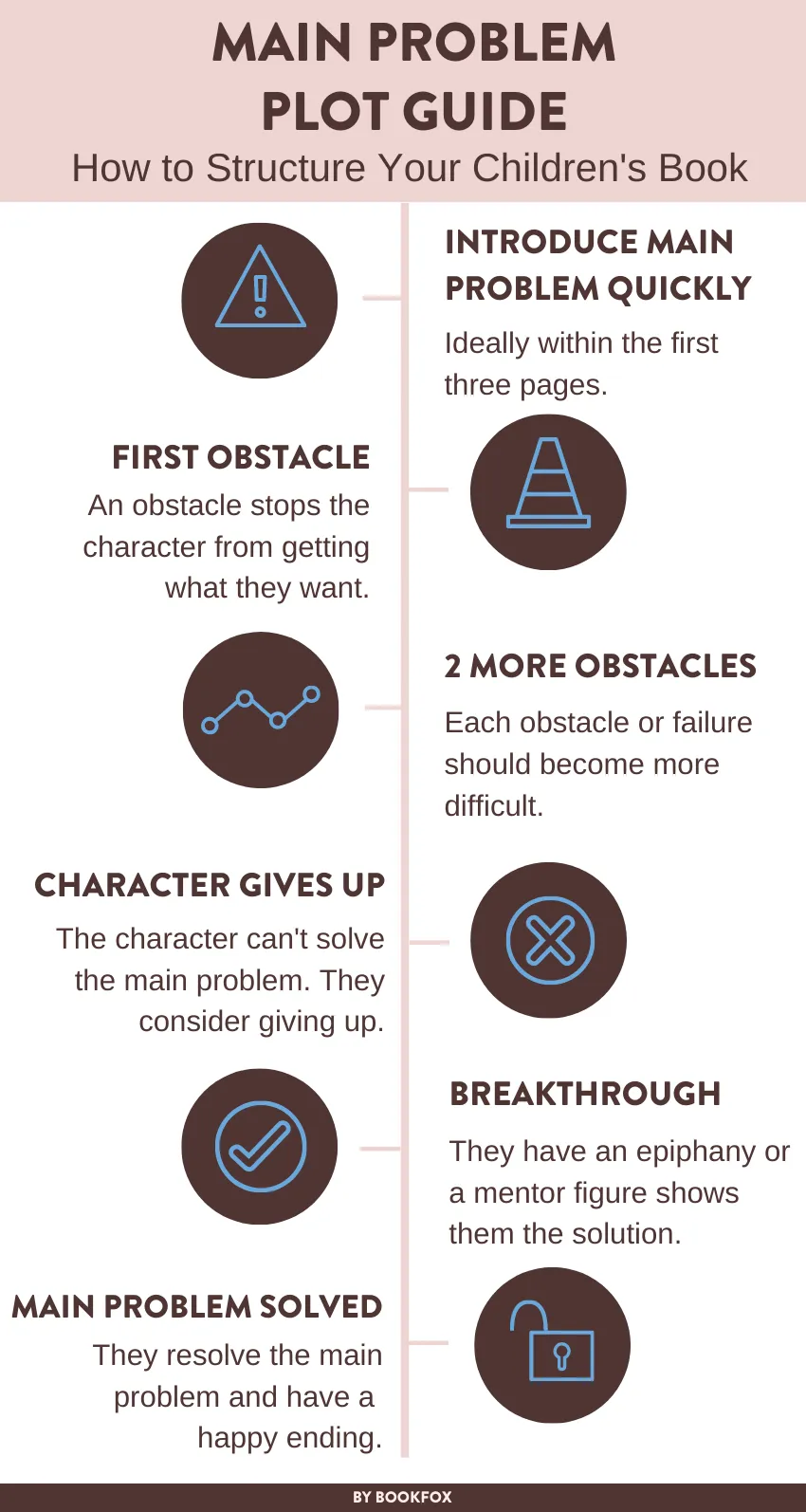
five. Figure Out the Main Problem
Every character has a trouble. It could be a mystery, information technology could be a person, it could be a crisis of conviction. That problem is what they will struggle with for the entire book.
The majority of the volume will be obstacles the primary character has to hurdle before they can solve their trouble.
Hither are the main mistakes kickoff writers make with their character's Master Problem:
- The graphic symbol solves the problem besides hands. Make your character really struggle and fail. Ideally, the primary character should fail at least three times before solving this problem, and perhaps fail as many times as five (if you lot're writing for older children).
- There are not a series of obstacles. On the character'due south mode to solving the problem, the primary character should run upwards against a whole agglomeration of obstacles. Don't accept him defeat a single obstacle and then voila, trouble is solved. To build a rocket transport to wing to space, the main character should lose some parts, his female parent should call him for dinner, his friend should tell him it won't work, it should rain, etc.
- The character doesn't intendance enough nearly solving the trouble. This has to be a HUGE problem for the kid — they accept to feel like it's a thing of life and death, even if the bodily trouble is only a missing button. As long as the child feels like it'south a huge problem, the reader will feel like it's a huge problem.
6. Use Repetition

Children love repetition! Parents dear repetition! Publishers love repetition!
Everybody loves repetition! (check out my post on 17 fantastic examples of repetition in literature).
If y'all're non repeating something in your children's book, it's not going to be a peachy children's book.
I mean, all of Dr. Seuss is basically built on repetition (and he'due south pretty much the godfather of children's books).
Hither are three types of repetition that you can use:
- Repetition of a discussion or phrase on a page
- Repetition of a word or phrase across the entire book
- Repetition of the story construction
Any book that rhymes is using repetition of similar words, and I would argue that story structure repetition is even more important than linguistic communication repetition.
Click on the image below to learn more about my children's book course:
7. Write for Illustrators
One of the chief jobs of the writer is to fix up the illustrator for success. (and you can hire an illustrator from the SCBWI illustrator gallery)
But so many writers aren't thinking near what kind of fabric they're giving to the illustrator.
If you have a book that takes place inside a house between two characters, the illustrator is going to struggle to depict visually interesting images.
A practiced illustrator tin radically improve your book, simply they're also working with what you give them. And so requite them more:
- Cull fun buildings for your setting (put it in a greenhouse rather than a schoolhouse)
- Think of funny-looking principal characters (a lemur is much more fun to describe than a dog)
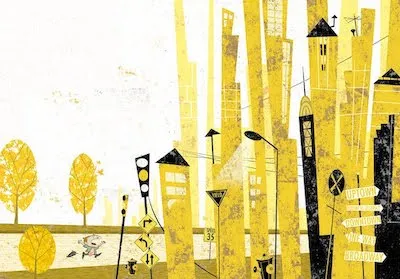
- Become out in the open rather than being inside (wheat fields are more entertaining than a bedroom).
Within locations like a schoolhouse limit illustrators:
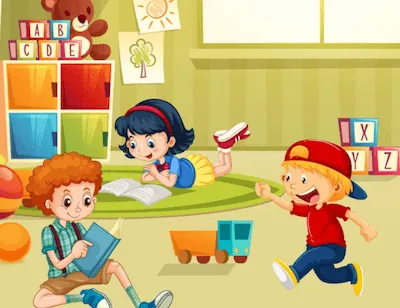
While illustrators have much more freedom with fun outside possibilities:
Remember, a publisher isn't only evaluating your book on the words alone. They're thinking near the combination between your words and an illustrator'due south pictures. And if you don't provide a solid half with the words, they're going to say no.
And if you're self-publishing, good visuals are much more than fun for the child!
8. Cease the Story Rapidly
Once the main problem of the story is resolved (the true cat is found, the bully says he's pitiful, the ii girls become friends again), you only have a page or two to finish the book.
Since the story is done, in that location's no longer any tension for the reader, which means they don't have an incentive to go on reading. So do them a favor and end the book as quickly every bit possible.
Basically, you want to provide a satisfying decision and wrap upward all the storylines.
I of my favorite tricks for an catastrophe is a technique that stand-up comedians telephone call a "Call Back." This is when they reference a joke from before in their set to finish out their routine.
You can use this in children's books past referencing something in the first v or 6 pages of the book. For instance, if the main character was so focused on a majestic lollipop that they wandered away and got lost, then after she was found the final folio of the volume might say: "and from then on she only licked cherry lollipops!"
9. Choose Your Title
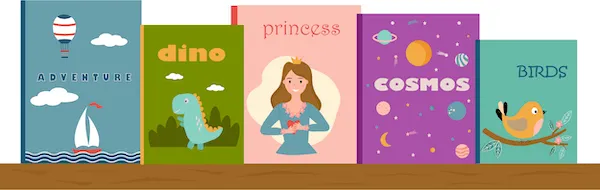
Now you may say: why are we figuring out the title afterwards we do all the writing? Good question.
The truth is that many writers don't know the essence of their story until later on they write the book. And then y'all can take a temporary title, but just know that you lot'll probably revise information technology after you finish.
And revising is fine! Everybody revises. Don't be afraid to change your title multiple times until yous hit the exact correct one.
Also, the championship is the number one marketing tool of your book. Almost readers decide whether or not to pick up your volume from the title alone. That means choosing a title might be the most important affair you practise (although it's probably a necktie with choosing an illustrator).
- Employ Similar First Messages (Alliteration). Say your volume is virtually Amy's risk finding a whole meadow full of poppies, and how she befriended a mouse there.
- Don't Title: "Amy'due south Adventure with Poppies."
- Do Title: "The Mouse in the Meadow."
- Don't Utilise a Descriptive Title. Many people simply describe the contents of their book in the title, but I would warn confronting this. For instance, at that place'due south a volume near a boy who is searching through a vast library to find a special book well-nigh eternal life. What would you championship this volume?
- Don't: "The Vast Library." (Boring)
- Don't: "The Library Hunt." (This is improve. "Chase" is a good word, and the combo with library is intriguing.)
- Practice: "How to Live Forever." (This is the actual title, and it's great. This is the proper noun of the book the boy is searching for, and it lets the reader know in that location will be some deep topics discussed.)
- Apply an Activeness Title. You desire free energy in your title. A lackluster title will spoil your book'south chances for sure. That means you desire fun active verbs inside your championship rather than passive ones.
- Don't: "Johnny'due south Wonderful Day."
- Do: "Helm Johnny Defeats Dr. Doom." (Captain Johnny makes it more playful, we accept the active verb of "defeat" and Dr. Doom uses alliteration.)
- Use the Technique of Mystery. Does your title tell the reader everything they want to know about the topic or does it provoke their curiosity? Your goal is to give plenty information that the parent says, "Huh, that sounds fun."
- Don't: "The Bird in the Window."
- Do: "Oh, the Places You'll Go!" (What places?)
- Do: "Olivia Saves the Circus." (How? Nosotros want to know.)
- Practise: "How to Take hold of an Elephant." (Tell me more!)
- Google "Children'south Volume [Your Title]".You want to see if the title is already taken (or if there is a title that is too close). Now say your perfect title is already used. Can you nevertheless use that title? Well, yes. People can't copyright titles. But you'll have a difficult time distinguishing your volume from that book, then it's non e'er the best idea.
- Test Your Title with Children and Adults. It's important to run into how children react to your title. Are they excited? Practise they seem bored? Only remember that children aren't the ones buying books — parents are. Then brand sure to bounce it off some adults as well and get their reaction.
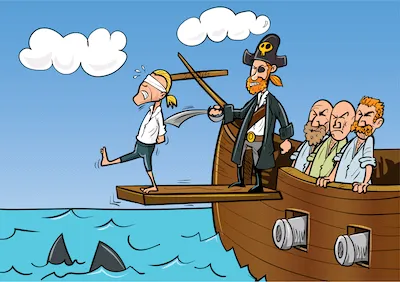
x. A Revision Strategy: Walk the Plank
Most unpublished film books are far too wordy.
In fact, if y'all talk to publishers and agents, they will say that children's books existence also long is i of the primary things that makes them reject a book.
Here is a revision technique that will fix that problem. Make every single word, every unmarried phrase, every single sentence "Walk the Plank."
In other words, you highlight information technology and hover over the delete button (this is the "walking the plank" moment) and ask yourself: if I cut this, will the story no longer make sense?
If the story will still make sense, so PUSH that phrase/sentence off the plank and delete it.
If the story volition not make sense, then that word or phrase or judgement gets a reprieve (at least in this circular of editing!).
In full general, the shorter your children'due south volume, the better chance that publishers/agents will like information technology and the better take a chance you'll accept of pleasing children and parents (not to mention shorter books are cheaper to illustrate — and illustration is expensive!).
xi. How to Find an Editor
Once you've written your book, you lot really need to get an good's opinion to assistance you lot improve it. An editor will be the all-time investment in your book. After all, I know yous love what you've written, but at that place are so many tricks and techniques to writing that tin can improve the experience of the reader.
There are two different types of children'south book editors.
- First, there are developmental editors (also chosen content editors). These editors help you improve the story concept, the plot, the characters, the pacing, the dialogue, and whatever else needs to exist improved. They look at the big picture and assistance you lot revise your book (this is what I do!).
- After y'all apply a developmental editor, then you would need a copy editor. This is the editor who fixes all the formatting, grammar, spelling, verb tenses, style, and all the other minor details. They make your book await professional.
Sometimes you'll find an editor who can do both, but you tin't do both at the same time — y'all have to make all the big film revisions earlier you start tinkering with all the small details.
Here is a handy checklist when looking for an editor.
- Your editor should be someone who has been in the industry for a while.
- Your editor should take examples of published children'due south books that they've edited.
- Your editor should accept testimonials from satisfied writers.
- Your editor should be a fellow member of SCBWI (Guild of Children's Book Writers and Illustrators).
The cost of editors vary widely, merely if you're not paying at least $400 – $600, you're probably getting an apprentice without a lot of feel in the industry. And you don't desire a beginner messing around with your volume.
If you'd like to hire me every bit an editor, check out my children'due south volume editing page.
12. How to Find an Illustrator
This is the virtually of import step of the post-writing process.
An illustrator will be the most expensive stride of publishing a children's book, but as well the nigh essential for a successful book. The more you lot spend on this step, the better your book will look. I mentioned the SCBWI illustrator gallery above, but I as well wanted to recommend Fiverr as an cheap place to hire an illustrator.
If neither of those work out, check out the website Children's Illustrators or for some other option, Illustration X.
When you're because an illustrator, this is what you should ask for:
- To run into examples of previous piece of work (do you lot similar their style?)
- To see a copy of the contract (practice they continue the rights or do you?)
- How long it will take (await at the graphic beneath for average times)
- Whether they also exercise layout, type, and book design (otherwise you need to hire a volume designer after)
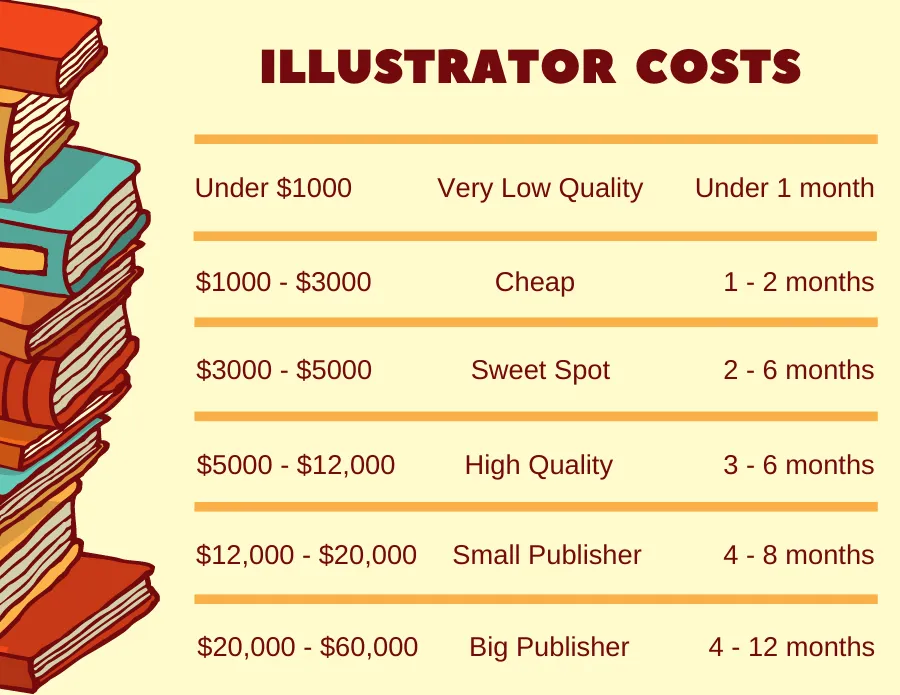
Make sure you lot're really in love with the illustrator's style, and that it matches your vision for what y'all want the book to wait like.
WHAT FOLLOWS IS VERY IMPORTANT.
You tin can't simply throw words upwardly on an analogy and expect them to look good. It's essential to have a happy marriage betwixt text and image. You desire to think about:
- The font. This is incredibly important. I see a lot of self-published children's books that selected the wrong font, and it's glaringly obvious. Y'all need an illustrator to help y'all choose exactly the right font to lucifer the illustrations.
- The size of the font. This is important as well. It should exist consistent across the whole volume and should pair well with the size of objects in the illustration.
- The placement of the words. If you put the words in the wrong place on the image, yous basically ruin the entire illustration. It needs to exist carefully balanced and follow good composition guidelines like the dominion of thirds. Ideally, the words should enhance the illustration rather than detract from it.
- Folio breaks. What words should keep which pages? This is something you need to hash out with your illustrator earlier they begin. They need to have a say in this — don't just tell them how you lot want the pages to be broken up. For instance, they might accept the thought to have a ii-page spread without whatsoever words at all, or to separate a unmarried sentence across several pages, or to accept one page with a few sentences on it and the next page with just a short phrase for accent. This is the number 1 mistake I run into beginning writers/illustrators brand: they accept the same corporeality of text on every single page (usually a single sentence).
So either hire the illustrator to practise volume pattern, or hire a volume designer. But only don't choose the fonts and placements and font size on your own — get a book designer to help you.
Common Questions
Q: Should I copyright my book?

At that place are differing opinions on this, merely in full general I would say NO. Y'all don't have to worry near someone stealing your volume. If you go the traditional publishing road, the publisher volition copyright it for you. If you lot go the cocky-publishing route, you already ain the cloth the instant you wrote information technology, and so getting copyright only gives you added protection.
Now if you're going to chew your nails down to the nub worrying about this, then set your listen at ease. If you lot live in America, go to the U.Southward. Copyright Role website and yous can annals for nether a hundred bucks. I walk you through the steps on how to do this in my children'south book form.
Q: Practise I need illustrations earlier sending my book to editors, publishers, and agents?
This is a hard and fast NO.
Editors desire to work with the linguistic communication lonely, so unless your book requires the illustrations to make sense, you don't want to send the illustrations. Even then, y'all can easily put the illustration explanation in brackets [like so].
Publishers always e'er always hire their ain illustrators, so save yourself the money and submit the text solitary. This is because choosing an illustrator is a marketing decision (that they demand to make, not you lot) and because a practiced illustrator can toll $20,000. You probably don't have that kind of money lying around.
Now what if you lot're the illustrator? Well, then yous DO want to ship the illustrations. But if you go a rejection, it could either be considering of the story or because of your illustrations, and sometimes you won't know what the weak link is.
In full general, though, agents are looking to correspond illustrator/writers much more than often than they're looking to stand for writers alone. That'south considering children's book illustrators earn A LOT more than coin than children'south book writers (sorry, that's just the way it is).
Q: Should I ask for a non-disclosure agreement? (NDA)
If you desire to you lot tin can, merely you take a improve hazard of a bear eating you than someone stealing your book.
Plus, if they steal information technology, you can easily sue them and accept all the profits and more than, so there isn't much motivation for someone to steal your book.
The truth is that writers worry nearly this far more often than it actually happens. My advice would be to put all your energy toward creating the all-time children's book you tin create, and if you have a great book, the agent/publisher/editor will want to work with you, not steal from yous.
Q: Will you be my literary amanuensis?
No, I'chiliad an editor, and the office of an editor and literary agent are very different. An editor'due south job is to help you make your children'southward book the all-time it can be. The function of a literary agent is to play matchmaker and find a publisher who wants your book.
However, if you sign up for my children'southward book email listing (via a pop-upwards on this page) I volition send you a list of children'southward book agents. Also, here's some other listing of agents.
Q: Volition you help me find a publisher?
That'due south mainly the role of a literary agent, but I practise have a list on Bookfox of 30 publishers who volition accept submissions without a literary agent.
And if y'all hire me for editing, sometimes I'll be able to recommend a few publishers where your book might be a fit, only it's non similar a handshake deal. Publishers get a big number of submissions and they have to take on the books they know they tin sell.
Q: How many submissions will an agent or publisher become in a year?
A outset agent might get ii,000 – iii,000 submissions in a year, while an established agent might receive three,000 – 8,000 submissions.
Publishers who accept submissions get anywhere from between 2,000 submissions to fifteen,000 submissions, although about all publishers who start getting as well many submissions end accepting submissions (because it costs too much to hire people to wade through all those submissions).
I don't mean to discourage you, but just aid you lot make an informed decision nigh whether you should self-publish or seek a traditional publisher. It'south actually tough to land an amanuensis or a publisher, and it can take a lot of time and work.
What'southward wonderful about cocky-publishing is that within a week you tin can be belongings your book in your hands.
Q: Should I cocky publish or seek a traditional publisher?
So for self-publishing, there'southward lots of upsides: there's no wait fourth dimension, and you get complete command of the project (such as comprehend fine art and illustration), and there's not that much of a price if you do it all yourself.
But … you accept to do all the marketing yourself, and you lot don't have anyone to guide you through the process, and you don't have the reputation of being published by a traditional publisher. Y'all should practise self-publishing if you're a real become-getter and yous retrieve you lot tin get the discussion out there most your book.
For traditional publishing, at that place are also many upsides: yous would get an accelerate (money is nice!), they would handle all the proofreading, ISBN, illustrations, cover art, etc, and they would give you some guidance with how to practice the marketing and promotion.
Just … information technology can be very, very hard to go an acceptance from an amanuensis or from a publisher. Sometimes you lot accept to ship the story out for a year or two, submitting to a hundred outlets or more. Get this route if you take a lot of patience and you desire the volume to reach a wider audience.
Warning:
Take y'all always flirted with the idea of writing a NOVEL?
They say children'south books are the gateway drug for writers (actually, nobody says that, except me).
If you lot desire advice on novel writing, read my post, "12 Steps to Writing a Bestselling Novel in 6 Months."
It is the best commodity you lot'll ever read on how to write a novel.
You will never regret clicking that link.
Did you lot desire more advice on how to write a children's book?
So let's review the 12 principal points:
- Observe Your All-time Idea
- Develop Your Chief Character
- Write the Right Length
- Get-go the Story Chop-chop
- Figure out the Main Problem
- Use Repetition
- Write for Illustrations
- Cease the Story Rapidly
- Choose Your Title
- A Revision Strategy: Walk the Plank
- How to Find an Editor
- How to Discover an Illustrator
Please leave a comment below if this material was helpful and if you lot take any other questions.
Also, delight cheque out my:
- Children'south volume course — "Two Weeks To Your Best Children's Book"
- Children's book editing — let me help yous with your book.
Source: https://thejohnfox.com/2019/02/how-to-write-a-childrens-book/
0 Response to "Art of Writing and Lillastraing Childrens Books and Getting Them Published Book"
Post a Comment